
A French country kitchen combines warmth, natural materials, and craftsmanship into a room that feels collected over time rather than installed all at once. The defining elements are a statement range as the focal point, natural stone or wood surfaces, muted or earthy cabinet colors, furniture-style cabinetry, and aged metal finishes. You can lean classic or modern, but in every version the range is the anchor the rest of the room is designed around.
- A French country kitchen is defined by three things: natural materials, handcrafted detail, and warmth, a room that feels lived in rather than showroom-perfect.
- The range is the anchor. Choose it first, then build the palette, cabinetry, and hardware around it.
- Cabinets lean to muted, earthy colors in furniture-style layouts, with aged brass, bronze, or iron hardware rather than bright chrome.
- Natural surfaces do the heavy lifting: honed stone counters, handmade or zellige tile, wide-plank or terracotta floors, and exposed beams where the architecture allows.
- The style flexes from classic (ornate, distressed, romantic) to modern (cleaner lines, the same materials, less ornament).
The phrase French country kitchen conjures different things for different people. For some it is a sun-washed Provencal farmhouse in soft blue. For others it is a stone manor kitchen anchored by a range the size of a hearth. Both are French country kitchens, and what unites them is not a single look but a way of building a room: natural materials, real craftsmanship, and a warmth that reads as collected over time. If you are new to the appliance at the center of it all, start with our guide to what a French range is.
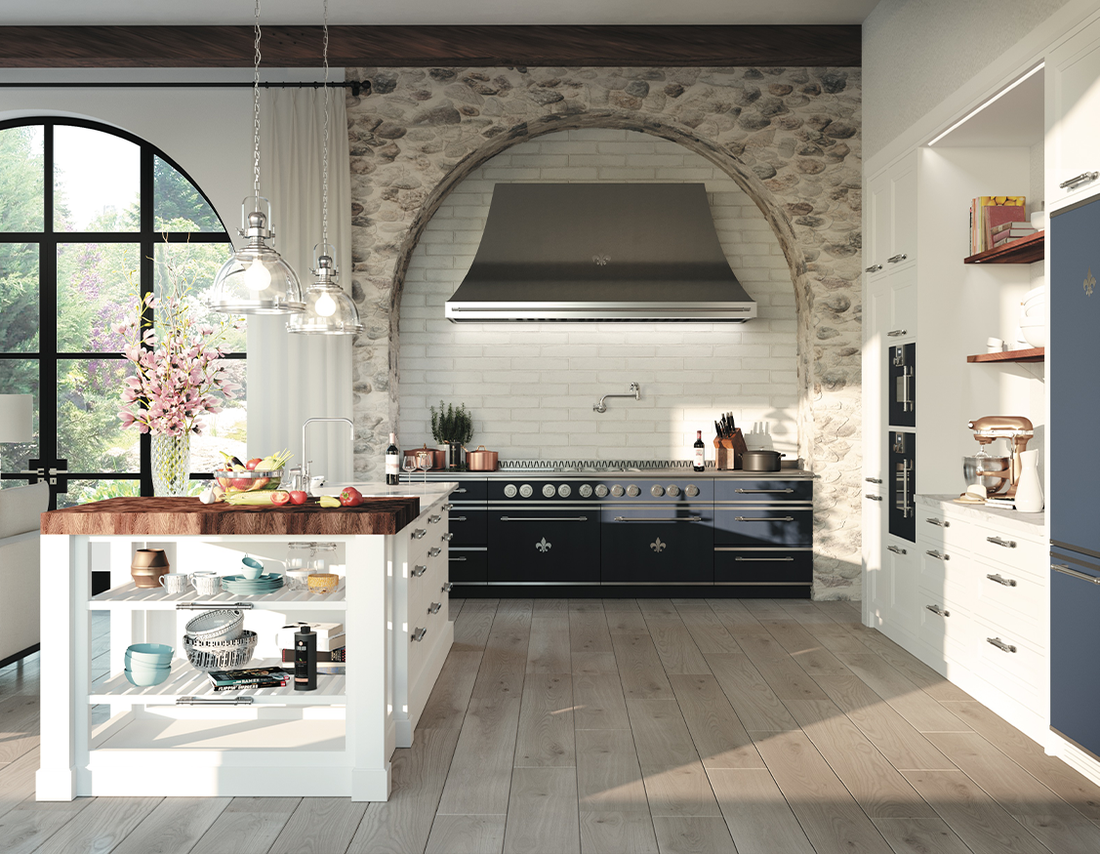
French country style comes from the farmhouses and manor kitchens of rural France, especially Provence, where kitchens were working rooms built from local stone, timber, and iron. The look has endured because it solves something a lot of luxury kitchens miss: it feels lived in. Nothing is sterile, nothing is showroom-perfect, and yet everything is high quality and made to last.
At its core, a French country kitchen balances three things: natural materials, handcrafted detail, and a sense of warmth. Get those three right and the style follows, whether you interpret it traditionally or bring it up to date.
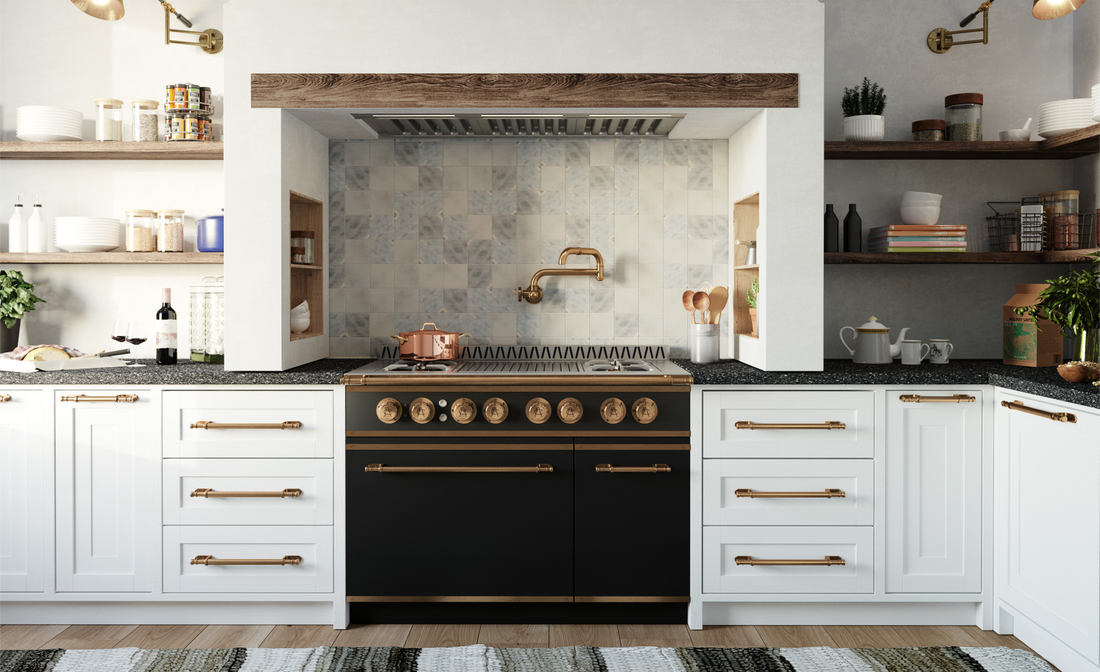
In a French country kitchen, the range is the heart of the room. This is not decorative language. The scale, color, and presence of a French range set the proportions and palette for everything around it, from the hood above it to the cabinetry that frames it.
That is why the design should start with the range rather than end with it. Once you have chosen a custom French range, its width sets the cooking wall, its finish informs the hardware, and its color either grounds the room in a classic tone or becomes the bold centerpiece of a more modern space. Designing the room first and squeezing a range in later is the most common way a French country kitchen ends up feeling almost right but not quite.
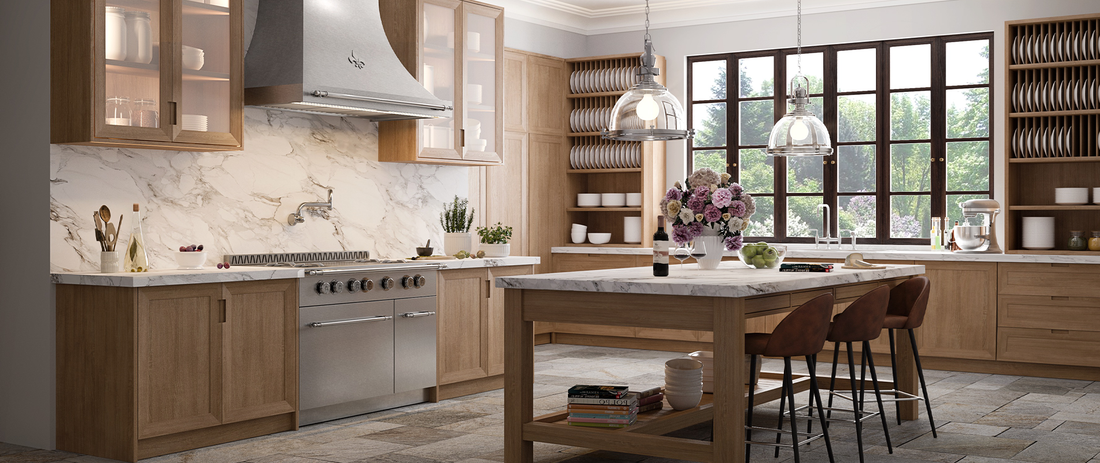
Cabinetry carries much of the French country look, and it is where most people make their first decisions.
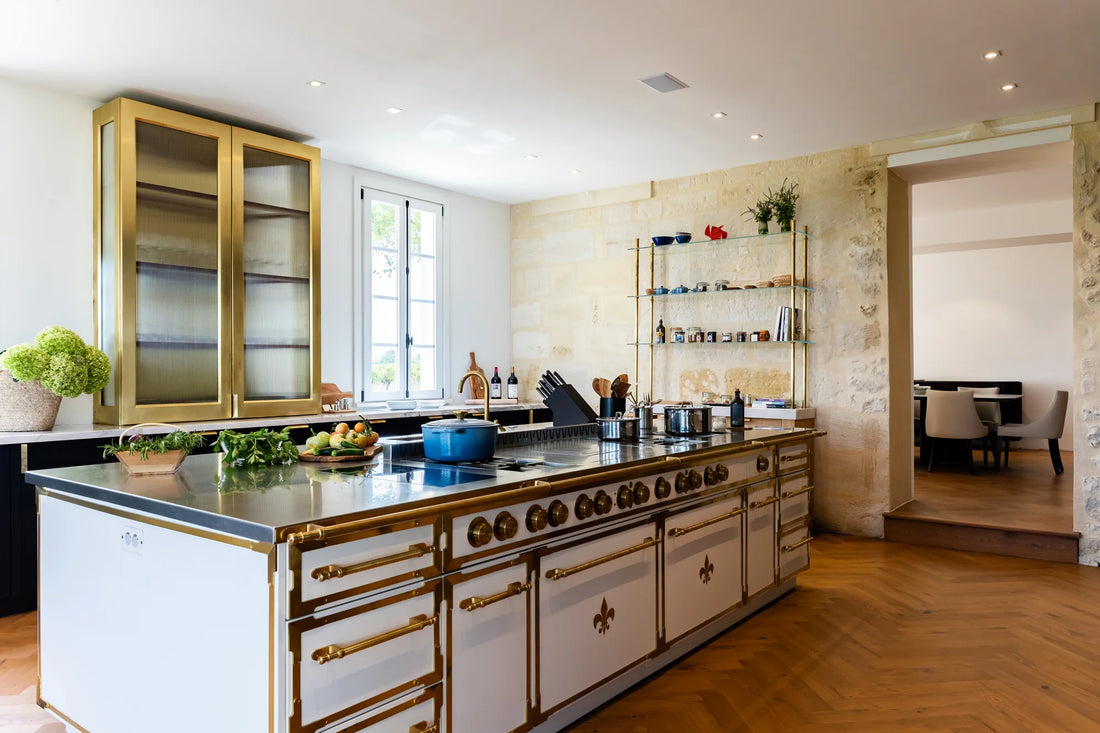
If cabinetry sets the tone, materials make it believable. French country kitchens rely on surfaces with texture and history.
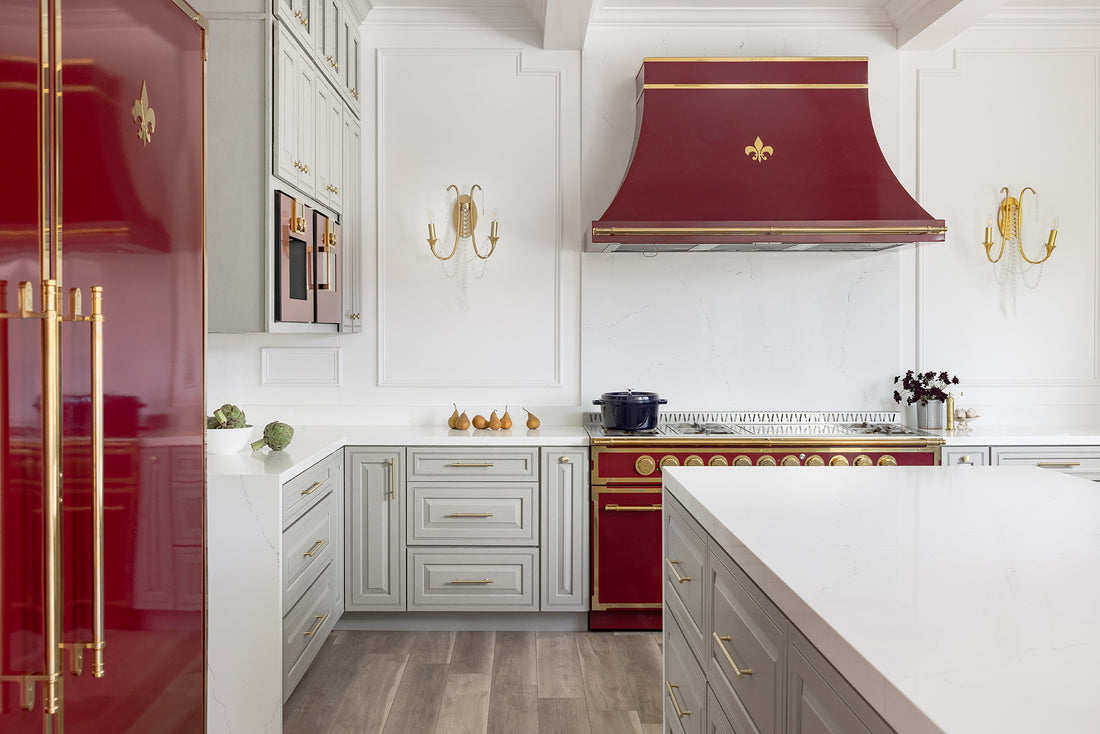
You do not have to choose between old-world and current. The style flexes.
A classic French country kitchen embraces ornament: carved detail, an ornate hood, distressed finishes, warm color, and a deliberately unfitted, collected feel. It suits older homes and buyers who want the full romance of the style.
A modern French country kitchen keeps the materials and warmth but strips back the ornament: cleaner cabinet fronts, a simpler hood, a more restrained palette, and less distressing. It suits contemporary architecture and buyers who love French country warmth but want it to feel current. In both, the range remains the anchor. The difference is how much ornament surrounds it.
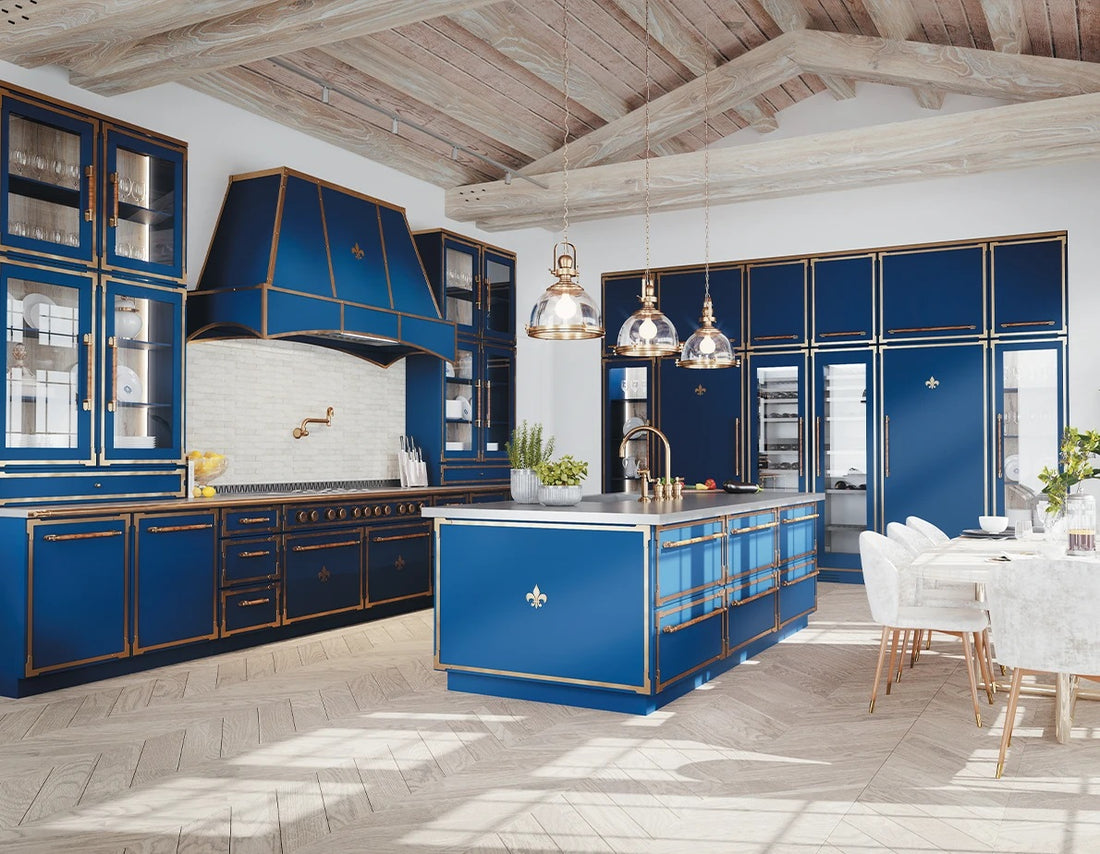
Designing a French country kitchen as a single project, with the range, cabinetry, and materials chosen together, is what makes it feel cohesive rather than assembled piece by piece. You can browse real examples in our project gallery, or start a custom kitchen design built around a French range from the first consultation.

A French country kitchen combines warmth, natural materials, and craftsmanship into a room that feels collected over time rather than installed all at once. The defining elements are a statement range as the focal point, natural stone or wood sur...

A kitchen island built around a French range is sized after the range, not before it. Plan for at least 42 inches of clearance on every side (48 inches or more around a wide French range), size the island proportionally to the range's width, and ...

French kitchen design spans five broad style categories: classic (traditional Château-inspired), transitional (modern meets heritage), contemporary (sleek and architectural), Provencal (warm Mediterranean), and statement (bold colour and contrast...
